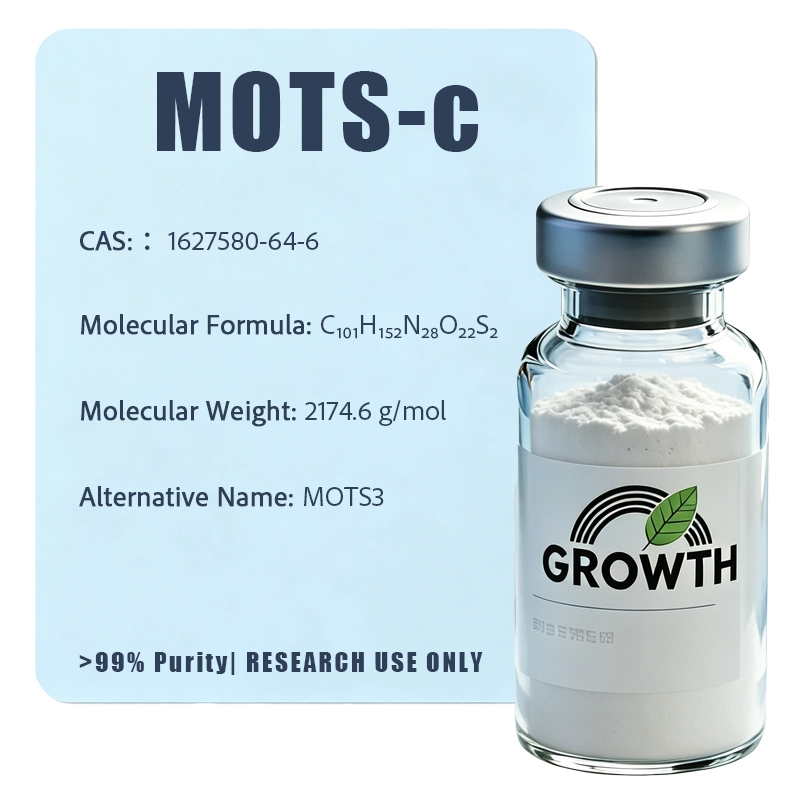
MOTS-c

MOTS-c (Mitochondrial Open Reading Frame of the 12S rRNA Type C) is a 16‑amino‑acid mitochondria‑derived peptide (MDP) encoded by a short open reading frame within the mitochondrial 12S rRNA gene. It acts as a key metabolic regulator, exercise mimetic, and geroprotective peptide that signals between mitochondria and the nucleus to maintain energy balance, insulin sensitivity, and cellular resilience.
10mg*10vials $83 20mg*10vials $160
15mg*10vials $130


Product Information

What is MOTS-c (Human)?

 
MOTS-c (Mitochondrial Open Reading Frame of the 12S rRNA Type C) is a 16‑amino‑acid mitochondria‑derived peptide (MDP) encoded by a short open reading frame within the mitochondrial 12S rRNA gene. It acts as a key metabolic regulator, exercise mimetic, and geroprotective peptide that signals between mitochondria and the nucleus to maintain energy balance, insulin sensitivity, and cellular resilience.
 
  • Sequence: MRWQEMGYIFYPRKLR
  • Molecular weight: 2174.59 Da
  • CAS: 1627580-64-6
  • Form: Lyophilized acetate salt (research grade)
  • Not approved for human therapeutic use

Target Population & Research Applications

 
MOTS-c is strictly for research use only. Investigated populations include:
 
  • Individuals with metabolic syndrome, obesity, insulin resistance, and type 2 diabetes
  • Aging populations studying sarcopenia, frailty, and age‑related metabolic decline
  • Models of non‑alcoholic fatty liver disease (NAFLD) and dyslipidemia
  • Neurological models: neurodegeneration, stroke, traumatic brain injury, and cognitive decline
  • Cardiovascular research: ischemia, heart failure, and vascular inflammation
  • Athletic and performance research (endurance, recovery, fat oxidation)
  • Wound healing, anti‑inflammatory, and antioxidant studies

Mechanism of Action

 
  1. Metabolic Regulation via AMPK ActivationMOTS-c inhibits the folate cycle enzyme MTHFD1, leading to intracellular AICAR accumulation and robust AMPK phosphorylation. This increases glucose uptake (GLUT4 translocation), fatty acid oxidation, and mitochondrial biogenesis via PGC‑1α, strongly improving insulin sensitivity and reducing adiposity.
     
     
  2. Mitochondrial‑Nuclear Retrograde SignalingUnder metabolic or oxidative stress, MOTS-c translocates to the nucleus to regulate gene expression involved in metabolism, stress resistance, and longevity, preserving mitochondrial function and reducing reactive oxygen species (ROS).
     
     
  3. Potent Anti‑Inflammatory & Antioxidant EffectsIt suppresses pro‑inflammatory pathways including NF‑κB and reduces TNF‑α, IL‑1β, and IL‑6. It also activates the Nrf2 antioxidant pathway, boosting SOD, catalase, and glutathione levels to protect against oxidative damage.
     
     
  4. Cytoprotective & Anti‑Apoptotic ActivityMOTS-c stabilizes mitochondrial membrane potential, inhibits pro‑apoptotic proteins, and reduces cell death under ischemic, toxic, or inflammatory stress.
     
     
  5. Central Metabolic ControlMOTS-c crosses the blood–brain barrier to modulate hypothalamic circuits, regulating energy intake, thermogenesis, and systemic metabolism.


Important Warnings & Safety Considerations


Contraindications

 
  • Hypersensitivity to MOTS-c or acetate excipients
  • Active or recurrent malignancy (metabolic effects may influence tumor progression)
  • Pregnancy, lactation, and pediatric use (no safety data)
  • Severe hypoglycemia or untreated diabetes
  • Severe hepatic or renal impairment
 

Precautions

 
  • May potentiate glucose‑lowering drugs; risk of hypoglycemia
  • Long‑term safety in humans is not established
  • Not orally bioavailable; administered via subcutaneous injection
  • Avoid use in individuals with unstable metabolic or endocrine conditions
 

Common Adverse Reactions

 
  • Mild injection‑site redness or irritation
  • Transient fatigue, dizziness, or mild nausea
  • Potential fluctuations in blood glucose

Associated Products

Related Experimental Studies