AOD9604
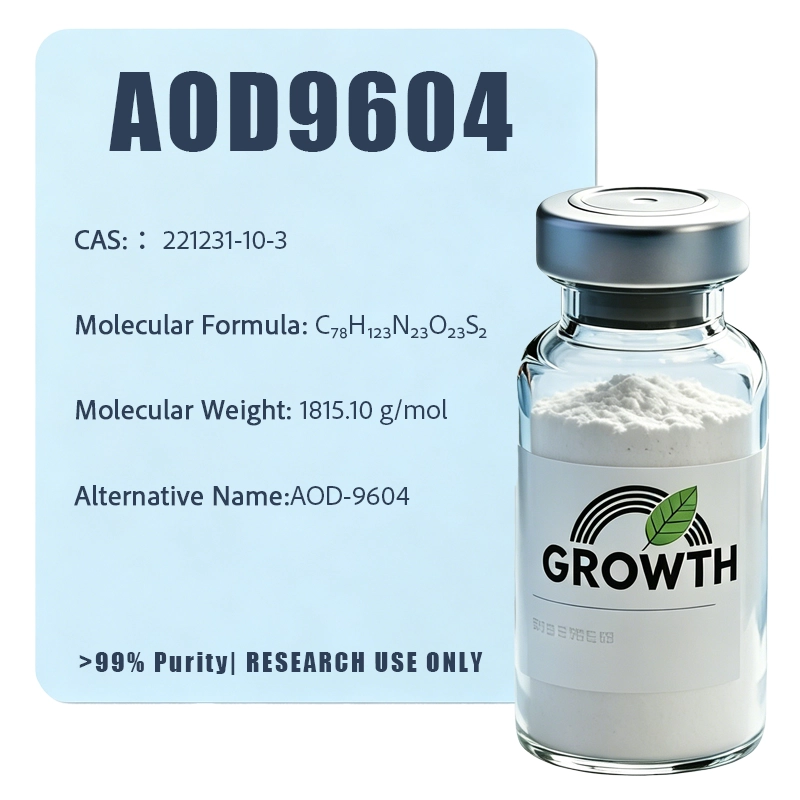
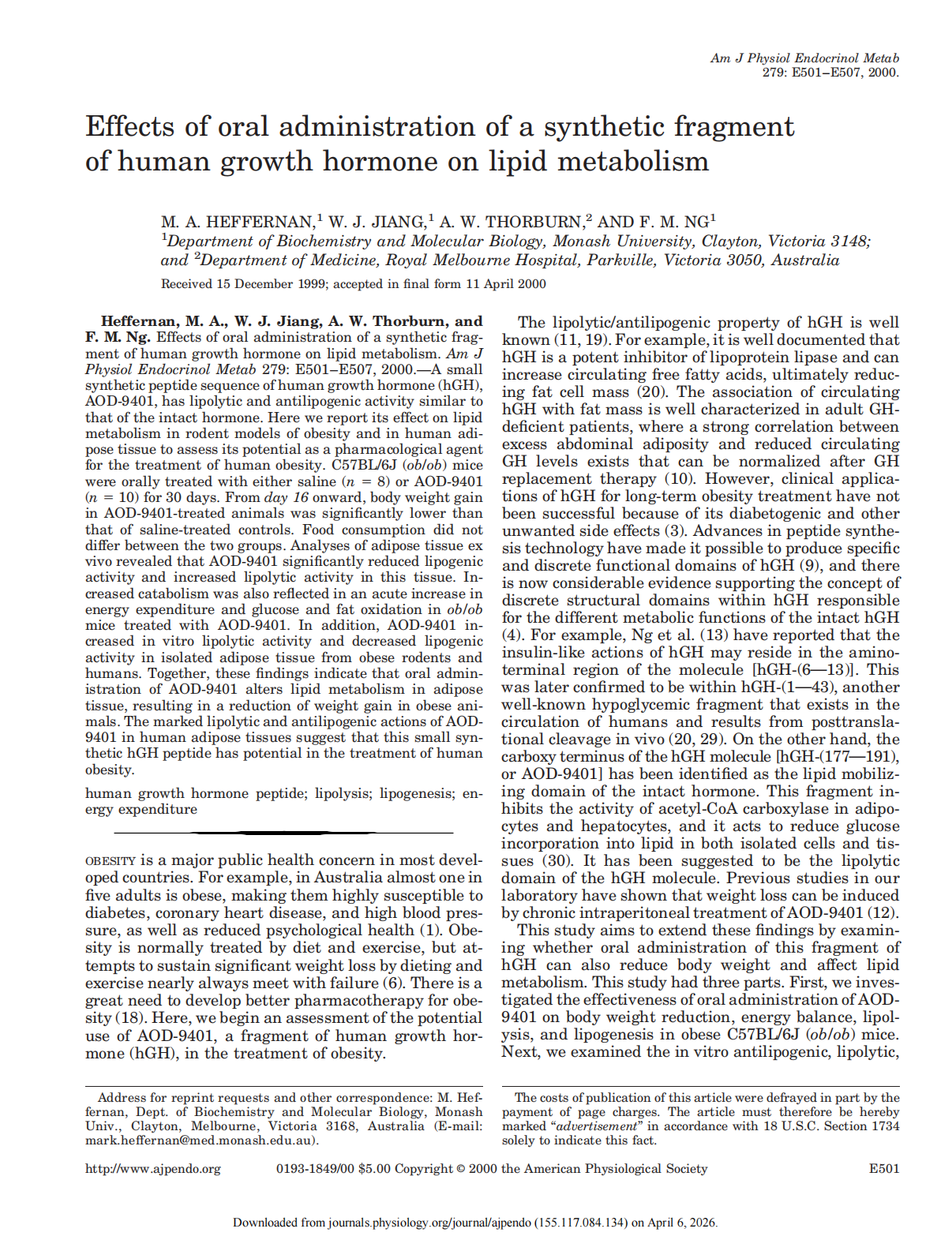
AOD9604 (Anti-Obesity Drug 9604; CAS: 221231-10-1) is a synthetic 16-amino-acid peptide derived from the C-terminal domain (176–191) of human growth hormone (hGH). Developed in the 1990s by Australian scientists, it is engineered to retain hGH’s lipolytic (fat-burning) properties without stimulating IGF-1 or causing anabolic/growth effects. It is orally bioavailable and injectable, primarily researched for obesity, metabolic dysfunction, and cartilage repair.
| 2mg*10vials | $45 | 10mg*10vials | $180 |
| 5mg*10vials | $95 |
Product Information
Target Population & Applications
Primary Research Uses
- Obesity & overweight (BMI ≥27): Reduces visceral belly fat; preserves lean mass
- Metabolic syndrome: Improves lipid profile (↓triglycerides, ↑HDL); reduces liver fat (NAFLD)
- Body recomposition: Fat loss without muscle loss (fitness/anti-aging)
- Osteoarthritis & cartilage repair: Stimulates chondrocyte growth, collagen/proteoglycan synthesis
- Diabetic dyslipidemia: Improves fat metabolism without affecting blood glucose
Contraindications
- Hypersensitivity to AOD9604 or excipients
- Pregnancy/lactation (no safety data)
- Active cancer (theoretical mitogenic caution; no IGF-1 link)
- Children <18 years (not studied)
Off-Label Uses
- Long COVID fatigue & metabolic dysfunction
- Post-cycle fat loss (steroid/TRT recovery)
- Joint pain/injury (combined with BPC-157)
Mechanism of Action (Molecular & Cellular)
A. Lipolysis (Fat Breakdown — Core)
- β₃-adrenergic receptor (β₃-AR) modulation (adipocyte-specific GPCR)
- ↑cAMP → activates PKA → phosphorylates hormone-sensitive lipase (HSL) & perilipin
- Triggers triglyceride hydrolysis → free fatty acids (FFA) + glycerol release
- Preferentially targets obese/visceral fat cells (vs. lean fat)
B. Anti-Lipogenesis (Blocks Fat Formation)
- ↓SREBP-1c (master lipogenic transcription factor)
- Inhibits fatty acid synthase (FAS) & acetyl-CoA carboxylase (ACC)
- Reduces hepatic de novo lipogenesis (liver fat accumulation)
C. Metabolic & Thermogenic Effects
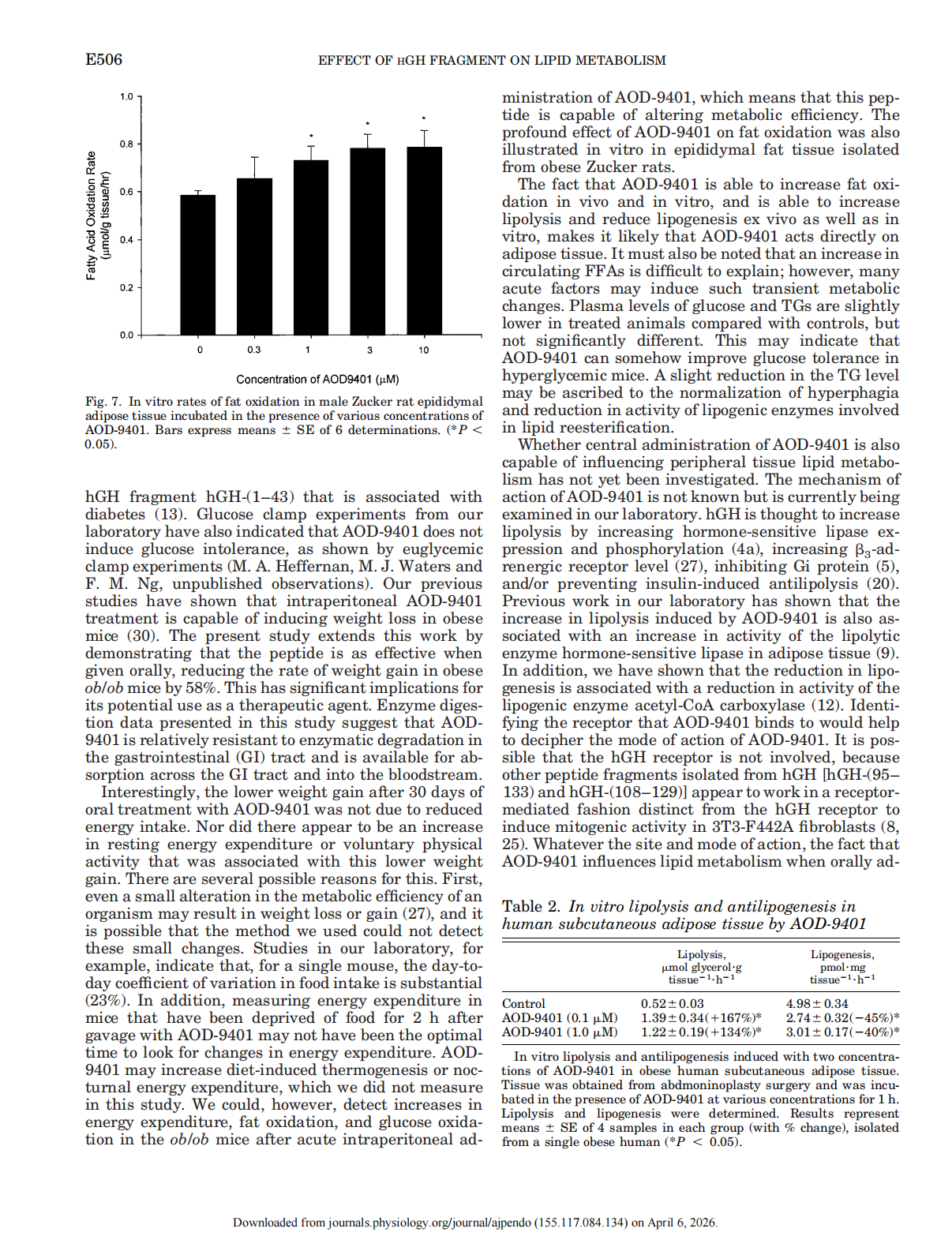
- ↑fat oxidation (mitochondrial β-oxidation) in muscle/liver
- ↑energy expenditure (adaptive thermogenesis)
- Improves insulin sensitivity in muscle (↑Akt phosphorylation)
D. Cartilage & Tissue Repair
- Stimulates chondrocyte proliferation & differentiation
- ↑collagen II & proteoglycan synthesis (articular cartilage)
- Anti-inflammatory: ↓IL-6, TNF-α, NF-κB in joints
E. Safety Mechanisms
- No hGH receptor binding → no IGF-1 increase (no growth/anabolic effects)
- No insulin resistance or hyperglycemia (unlike full hGH)
- Rapid degradation → no systemic accumulation